How to use this BMI calculator
- Choose your preferred unit system — metric (cm and kg) or imperial (feet, inches, pounds).
- Enter your height.
- Enter your weight.
- The calculator instantly shows your BMI, category, and the healthy weight range for your height.
What is BMI?
BMI, or Body Mass Index, is a screening number calculated from your height and weight. It estimates whether your weight is in a healthy range for your height and has been used by healthcare professionals worldwide since the 1970s.
BMI does not measure body fat directly. It is a quick, low-cost indicator that works well for population studies and as a starting point for individual conversations about weight.
How is BMI calculated?
BMI uses a simple ratio of weight to height squared:
Imperial: BMI = 703 × weight (lb) ÷ height (in)²
Worked example
For someone 170 cm tall weighing 70 kg:
- Height in metres: 1.70 m
- Height squared: 1.70 × 1.70 = 2.89
- BMI = 70 ÷ 2.89 = 24.2 (normal weight)
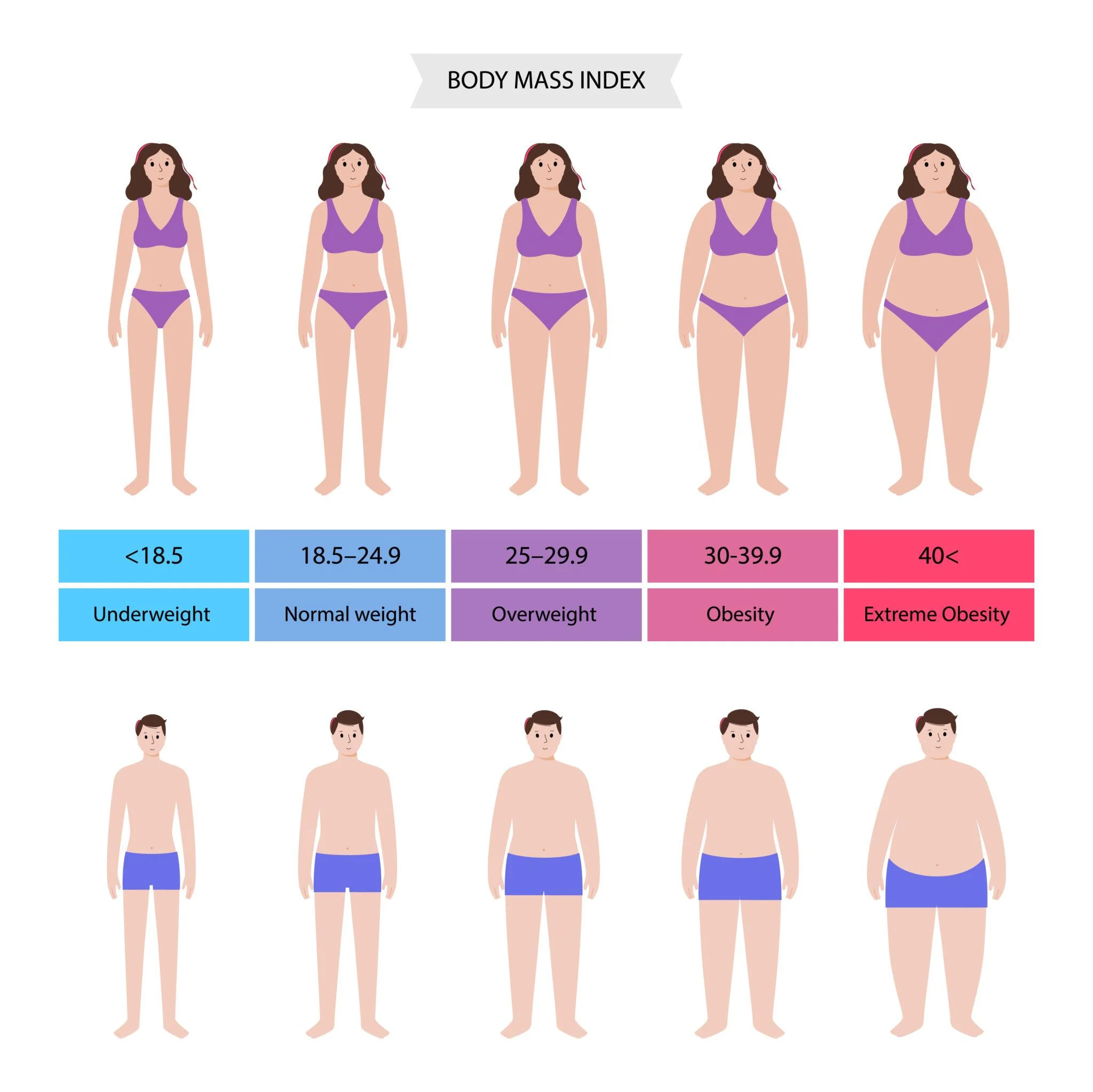
BMI categories for adults
The World Health Organization defines these standard BMI categories for adults aged 20 and over:
| Category | BMI range | Notes |
|---|---|---|
| Underweight | < 18.5 | May indicate inadequate nutrition |
| Normal weight | 18.5 – 24.9 | Lowest risk for most adults |
| Overweight | 25 – 29.9 | Increased risk of health conditions |
| Obese (Class I) | 30 – 34.9 | Moderate risk |
| Obese (Class II) | 35 – 39.9 | High risk |
| Obese (Class III) | ≥ 40 | Very high risk |
Limitations of BMI
- Athletes and muscular builds often score in the overweight range despite low body fat — muscle weighs more than fat.
- Older adults may have a higher body fat percentage at the same BMI as younger people.
- Different ethnic groups may have different healthy ranges — Asian populations often have higher health risks at lower BMI values.
- Children and teens need age- and sex-adjusted BMI percentiles instead of fixed categories.
- BMI does not show where body fat is stored — visceral fat around organs is more harmful than fat under the skin.
For a fuller picture, combine BMI with measurements like waist circumference, body fat percentage, and waist-to-hip ratio.
Frequently asked questions
What is a healthy BMI range?
For most adults, a BMI between 18.5 and 24.9 is considered healthy. This range is associated with the lowest risk of weight-related health problems.
Is BMI accurate for everyone?
BMI is a useful screening tool but not a diagnostic measurement. It can overestimate body fat in muscular people and underestimate it in older adults who have lost muscle mass.
Does BMI apply to children?
Standard BMI categories apply only to adults aged 20 and over. For children and teens, BMI is interpreted using age- and sex-specific percentile charts.
Why do I see different BMI ranges for Asian populations?
Research shows Asian populations face increased health risks at lower BMI thresholds. The WHO recommends the cutoff for overweight starts at 23 and obesity at 27.5, instead of 25 and 30.
Should I use metric or imperial units?
Either works — the calculator gives the same BMI value regardless of which unit system you choose. BMI itself is a unitless number.
How can I improve my BMI?
If your BMI is outside the normal range, gradual lifestyle changes work best — balanced eating, regular physical activity, adequate sleep, and stress management.