🌶️ Masala powder business — investment, profit & project report
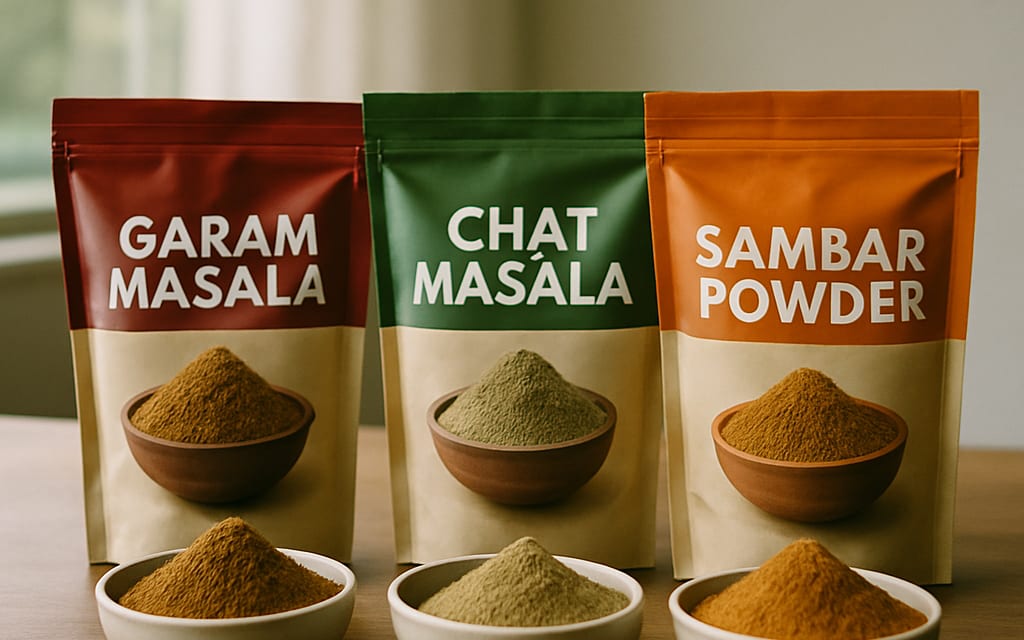
Plan a blended-masala unit (garam masala, chat masala, sambar, biryani masala): capex sizing, raw spice cost, packaging, wholesale pricing, break-even and 5-year profit. Currency-aware (₹/$/€/£/¥ — pick from the header dropdown). Includes downloadable project report in Word & PDF for loan applications.
📸Gallery
📋Eligibility — by region
🇮🇳India
- FSSAI license mandatory (Basic if turnover < ₹12L, State if < ₹20Cr, Central if > ₹20Cr). Agmark certification optional but adds premium positioning.
- BIS standards (IS 1797–IS 12399 spice grades). MSME Udyam registration for subsidy eligibility.
- Spices Board India registration mandatory if exporting (CRES — Certificate of Registration as Exporter of Spices).
🇺🇸USA
- FDA Food Facility Registration + FSMA Preventive Controls compliance. Whole Spices Standards (ASTA cleanliness specifications).
- State food-processor license + nutrition labelling per 21 CFR 101.
🇬🇧UK
- FSA registration + Environmental Health Officer (EHO) inspection. Allergen labelling (mustard, sesame, celery flag if blended).
- BRCGS or SALSA certification recommended for supermarket supply.
🇪🇺EU
- EU Reg 1881/2006 mycotoxin (aflatoxin) limits — strict for chilli and nutmeg. EU Reg 178/2002 traceability + 852/2004 hygiene.
- Country-specific food-business registration + HACCP plan.
🌏Australia / Canada / others
- AU: FSANZ Food Standards Code + state food act. CA: CFIA registration + provincial food-premises license + nutrition-facts table.
🏗️Setup requirements (capex breakdown)
Edit any value to match your local prices — totals update live and flow into the calculator below.
| Item | Specification | Cost (₹) |
|---|---|---|
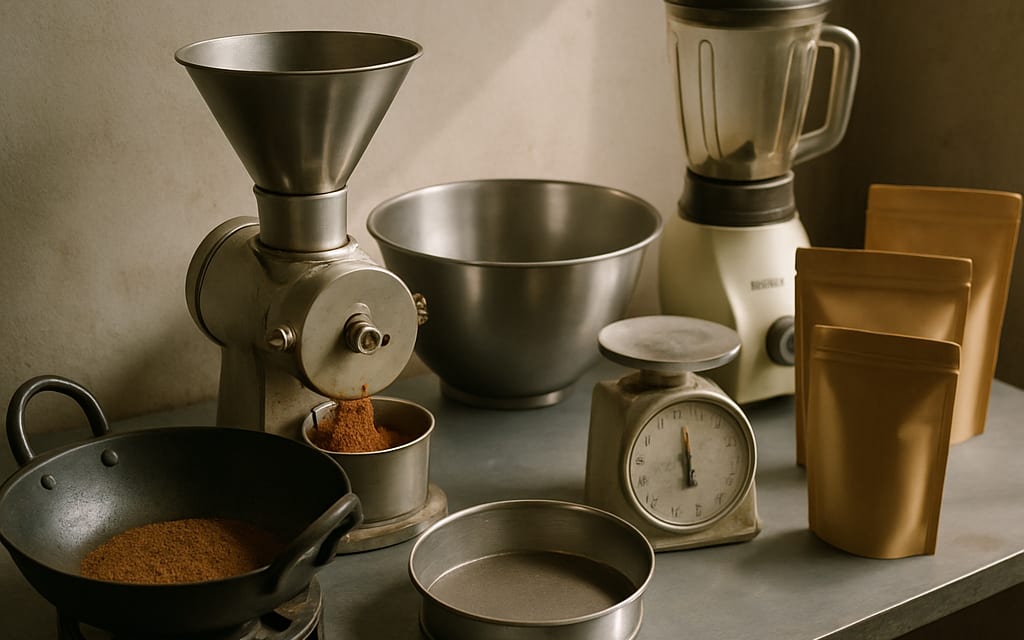
| Pulveriser + blender + roaster pan + sieve | 2-3 HP, SS contact surfaces | |
| Raw material initial stock | Chilli, cumin, coriander, cinnamon, cardamom, clove + 30 spice mix | |
| Packaging machine + label printer + pouches | Pneumatic pouch sealer | |
| Storage bins + weighing scale | Food-grade HDPE + digital scale | |
| Shop deposit + branding + signage | ~300 sqft | |
| Working capital | 1 month operating buffer | |
| Total capex | ₹2,85,000 | |
| Year | Revenue | Cost | Profit | Cumulative |
|---|
⚠️Risks & mitigation
- Whole-spice APMC price volatility: Chilli, cardamom and cumin swing 30–60% with monsoon and global supply. Mitigate via 2-month bulk stock during harvest (Mar–May for chilli, Jan–Feb for cumin).
- Aflatoxin / mycotoxin contamination: Improperly dried chilli and nutmeg risk EU rejection. Insist on < 12% moisture at procurement; lab-test every batch (₹2–3k/test).
- Big-brand competition: MDH, Everest, Catch, Aashirvaad dominate retail. Compete on regional recipe authenticity (e.g., Chettinad sambar, Kolhapuri kanda lasun), B2B restaurant supply, and small-pack (50g) value pricing.
- Recipe-replication risk: Once your blend succeeds, copycat brands emerge within 6 months. File copyright on packaging and trademark the brand name; rotate one signature blend annually.
- Adulteration accusations: A single brick-powder or artificial-colour press story can destroy a regional brand. Maintain 6-month sample retention + accredited-lab certificates per batch.
💰Funding & support programs
🇮🇳India
- PMFME (PM Formalisation of Micro Food Processing Enterprises): 35% credit-linked subsidy up to ₹10L under One District One Product (ODOP). Masala / spice clusters covered in 30+ districts.
- PMEGP: 15–35% margin-money subsidy for micro food-processing units.
- MUDRA Kishore / Tarun: ₹50k–10L collateral-free loans at base rate + 1–2%.
- Spices Board ASIDE: Export-promotion grants for infrastructure, ETP, lab equipment if exporting.
🇺🇸USA
- USDA Specialty Crop Block Grant (SCBG): State-administered grants for spice / herb value-added projects.
- Value-Added Producer Grant (VAPG): Up to $250k for branded/blended spice products.
- SBA Microloan: Up to $50k for equipment + working capital.
🇬🇧UK
- Start Up Loans: £500–£25k at 6% APR for new food businesses.
- Innovate UK Agri-Tech / Food Innovation: Co-funded grants for novel spice blends and processing tech.
🇪🇺EU
- CAP Pillar II + LEADER: 40–50% co-funding for rural micro food-processing.
- Country specialty-food grants: Italy "Marchio d'Origine" PDO/PGI support, France Bpifrance, Spain regional gastronomy grants.
🌏Australia / Canada
- AU: AgriFutures Producer Co-Innovation / Emerging Industries.
- CA: AgriInnovate Program — loans up to $5M for spice-processing scale-up.
📄Generate project report (Word + PDF)
Fill in your details — defaults are pre-populated. Click Print as PDF for a browser-printable PDF or Download Word for an editable .docx file usable in bank loan applications.
❓FAQ
How much space do I need for a 30 kg/day masala unit?
Approximately 250–350 sqft covers pulveriser, blender, packaging area, raw-spice storage and a small office. Ceiling height > 9 ft helps with dust extraction. Many home-based units start in 150 sqft.
Whole spices vs pre-ground — which to buy?
For premium blends always buy whole and grind in-house — pre-ground spices lose 30–50% volatile oils within 60 days. Pre-ground only makes sense for high-volume commodity blends (turmeric, chilli) where price beats freshness.
What's the realistic break-even with PMFME subsidy?
For a ₹2.85L capex unit with 35% PMFME subsidy, effective investment drops to ~₹1.85L. At ₹30–50k/month net profit, break-even is 4–7 months. Without subsidy, 8–12 months is typical.
Can I export masala from a small unit?
Yes — register with Spices Board India (CRES), obtain FSSAI Central license, and meet destination-country aflatoxin limits (EU is strictest at 5–10 ppb). Most exporters partner with a consolidator initially to avoid full-container minimums.
How do I differentiate from MDH / Everest?
Focus on regional authenticity (Chettinad, Malvani, Kolhapuri, Bengali panch phoron), B2B restaurant supply (chefs want consistent blends), and premium small-pack positioning (50g–100g pouches at 2× majors' per-gram price). Avoid head-on commodity blends.