🥒 Pickle making business — investment, profit & project report
Plan a home-kitchen or micro-shed pickle unit: jar capex, raw material cost, packaging, monthly revenue, break-even and 5-year profit. Currency-aware (₹/$/€/£/¥ — pick from the header dropdown). Includes downloadable project report in Word & PDF for loan applications & PMFME subsidy.
📸Gallery
📋Eligibility — by region
🇮🇳India
- FSSAI license mandatory for sale (basic registration <₹12L turnover; state license ₹12L–20Cr). Without it you cannot legally sell.
- MSME Udyam registration for PMFME / PMEGP subsidy eligibility. BIS quality mark optional but adds retail credibility.
- GST registration mandatory once annual turnover crosses ₹40L (₹20L in NE states).
🇺🇸USA
- USDA / FDA food-facility registration (renewed biennially). State acidified-foods rule applies — pickles must have pH < 4.6 verified and logged.
- Allergen labelling per FALCPA. Better Process Control School certificate may be required by state for the supervisor.
🇬🇧UK
- FSA food-business registration at least 28 days before trading. EHO inspection from local council with hygiene rating displayed.
- Allergen labelling (Natasha's Law) — full ingredients + 14 allergens on every PPDS jar.
🇪🇺EU
- EU Reg 178/2002 general food law + country acidified-food rules (e.g. France DGCCRF, Germany LFGB).
- Allergen labelling per Reg 1169/2011. HACCP plan mandatory.
🌏Australia / Canada / others
- AU: state food act + FSANZ Standard 1.6.2 (microbiological limits). CA: CFIA acidified-food regs + provincial food premises permit.
🏗️Setup requirements (capex breakdown)
Edit any value to match your local prices — totals update live and flow into the calculator below.
| Item | Specification | Cost (₹) |
|---|---|---|
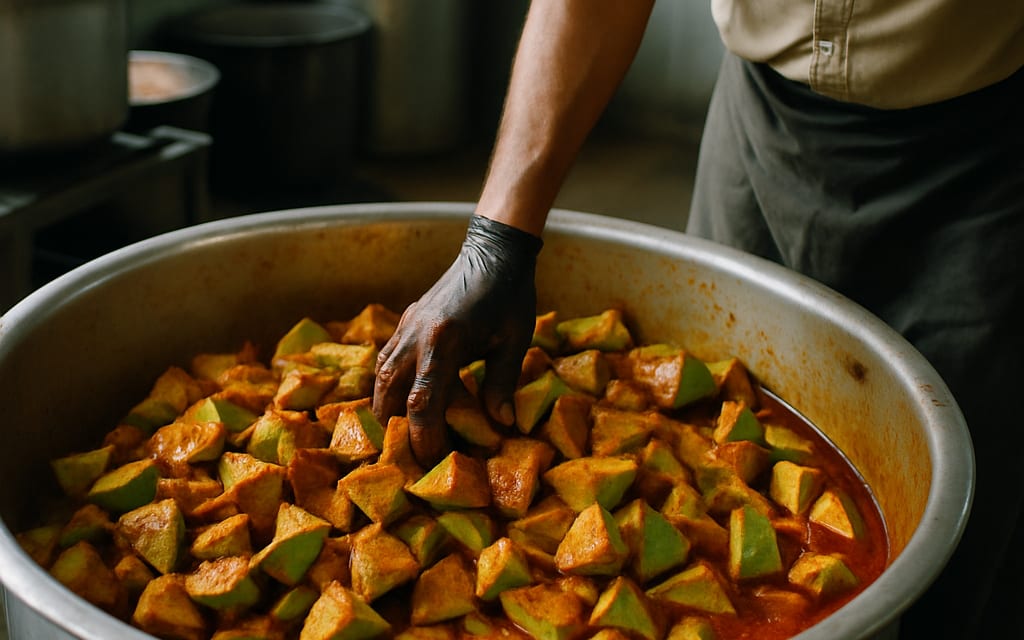
| Stainless-steel containers + mixers | Bulk SS drums + paddle mixers | |
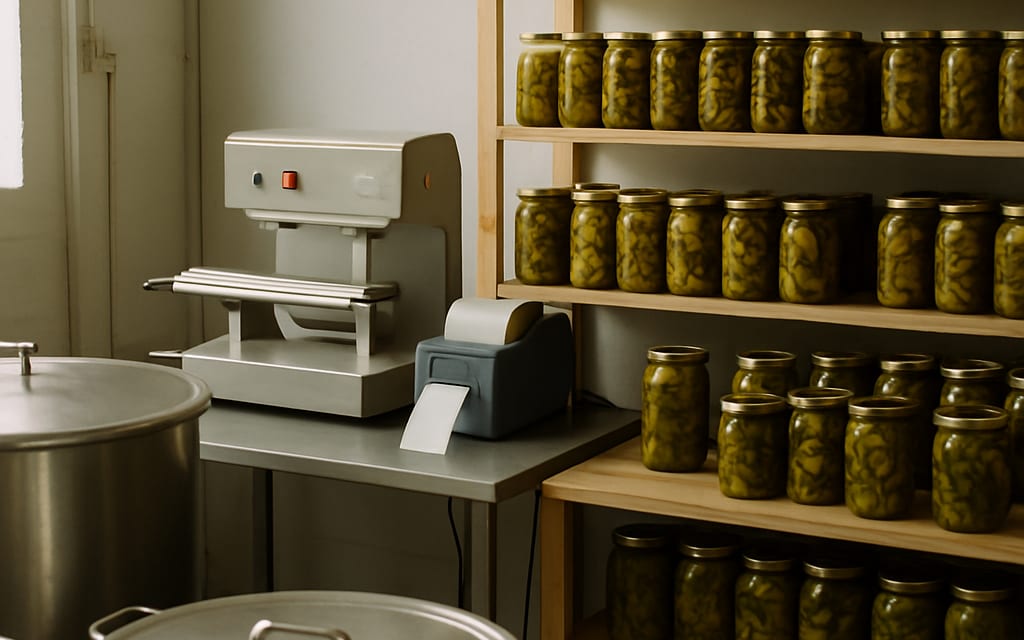
| Sealing machine + label printer | Induction sealer + thermal printer | |
| Raw material initial | Seasonal mango + spices + oil + glass jars | |
| Drying racks + cooling area | SS racks + ventilated shelving | |
| Shed deposit + branding | Rental deposit + signage + initial marketing | |
| Working capital | 2 months running costs | |
| Total capex | ₹2,75,000 | |
| Year | Revenue | Cost | Profit | Cumulative |
|---|
⚠️Risks & mitigation
- Seasonal raw-material price swings: Mango crop variance can spike input costs 40–80% in poor years. Mitigate by bulk-buying at peak season and brining for off-season production.
- Shelf-life issues / oil rancidity: Use refined oil with low FFA, store away from sunlight, and test peroxide value monthly. Use vacuum seal + induction cap to extend shelf life to 12+ months.
- Brand competition: MTR, Priya, Mother's Recipe dominate organised retail — compete via regional / homemade / authentic positioning, premium pricing, and direct-to-consumer (D2C) online.
- Food safety (pH control): Verify pH < 4.0 with a calibrated meter per batch. Maintain HACCP logs — one acidity failure = recall + license risk.
💰Funding & support programs
🇮🇳India
- PMFME (PM Formalisation of Micro Food Enterprises): 35% credit-linked back-end subsidy up to ₹10L per unit — ideal for pickle micro-units.
- KVIC PMEGP: 15–35% margin-money grant for first-time food entrepreneurs.
- NABARD ACABC (Agri-Clinic & Agri-Business Centres): low-interest term loan + 36–44% subsidy for agri-graduates.
- Mahila Coir / Mahila Udyam Nidhi: women-focused soft loans.
- NHB MIDH: support for raw produce procurement & primary processing.
🇺🇸USA
- USDA Rural Business Development Program (Rural BDP): grants for rural food processors.
- USDA Value-Added Producer Grant (VAPG): up to $250k for value-added products like pickles.
- SBA Microloan: up to $50k for equipment + working capital.
🇬🇧UK
- Start Up Loans: £500–£25k at 6% APR for new food businesses.
- DEFRA SFI (Sustainable Farming Incentive): grants for on-farm processing of horticultural produce.
🇪🇺EU
- CAP Pillar II: rural-development grants for value-added agri-products (40–75% co-financing).
- LEADER local action groups: small grants <€200k for micro food enterprises.
🌏Australia / Canada
- AU: AgriFutures emerging industries grants.
- CA: Canada Small Business Financing Program — up to CA$500k.
📄Generate project report (Word + PDF)
Fill in your details — defaults are pre-populated. Click Print as PDF for a browser-printable PDF or Download Word for an editable .docx file usable in bank loan applications.
❓FAQ
Can I start from a home kitchen?
Yes — most successful brands started home-kitchen. You still need FSSAI basic registration (₹100/year for <₹12L turnover) and clean separation of food-prep areas. Once turnover crosses ₹12L you must move to a licensed shed.
What's the realistic break-even?
For a ₹2.75L capex micro-unit producing 600 jars/month at ₹180/jar with 45% raw-material cost, monthly net profit is ~₹40–50k. Break-even is 5–7 months without subsidy; 3–5 months with PMFME 35% subsidy.
Mango vs mixed vs lime — which sells most?
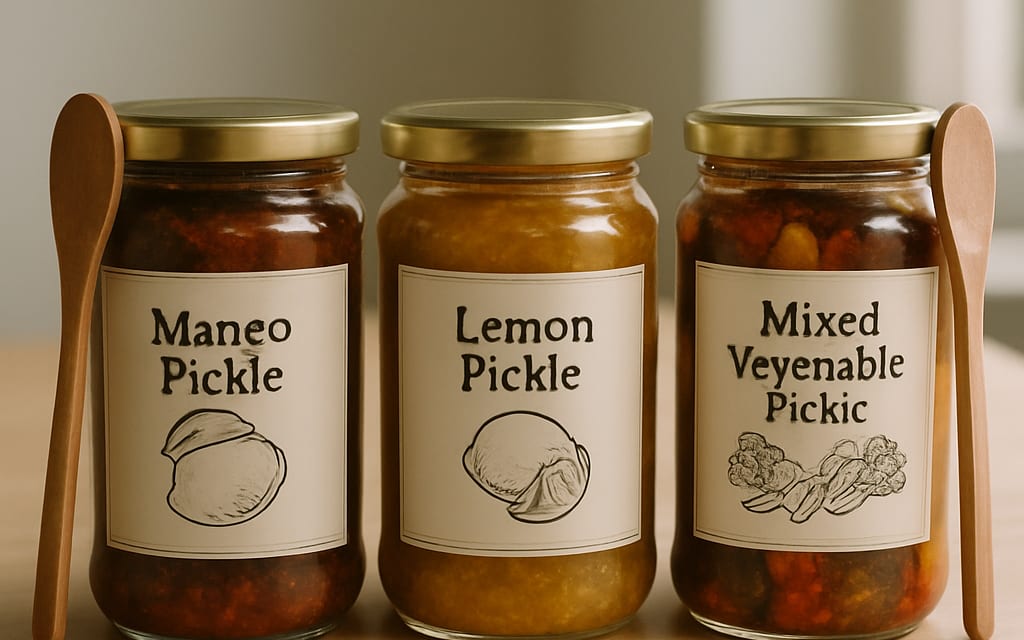
Mango (avakaya / methi mango) is the biggest seller (40–50% of category) but seasonal. Lime, garlic and mixed vegetable pickles give year-round volume. A 3-SKU lineup is the sweet spot for a micro-unit.
How do I control pH and ensure shelf life?
Add enough vinegar / acetic acid (or natural lime juice) to bring pH < 4.0. Use a calibrated pH meter (₹2–5k) every batch. Cover ingredients with oil (1cm above), use induction-sealed glass jars, and store cool & dark — shelf life will be 12–18 months.
Can I export pickles?
Yes — Indian pickles have strong NRI / South-Asian diaspora demand. You'll need an IEC (Importer Exporter Code), APEDA registration, destination-country labelling, and lab testing for pesticide residues. Start with the US/UK/Gulf via Indian-grocery distributors.