🪡 Sericulture (silk farming) business — investment, profit & project report
Plan a mulberry-based sericulture operation: DFLs per cycle, cocoon yield, bivoltine pricing, mulberry leaf cost, break-even and 5-year profit. Currency-aware (₹/$/€/£/¥ — pick from the header dropdown). Includes downloadable project report in Word & PDF for CSB / NABARD loan applications.
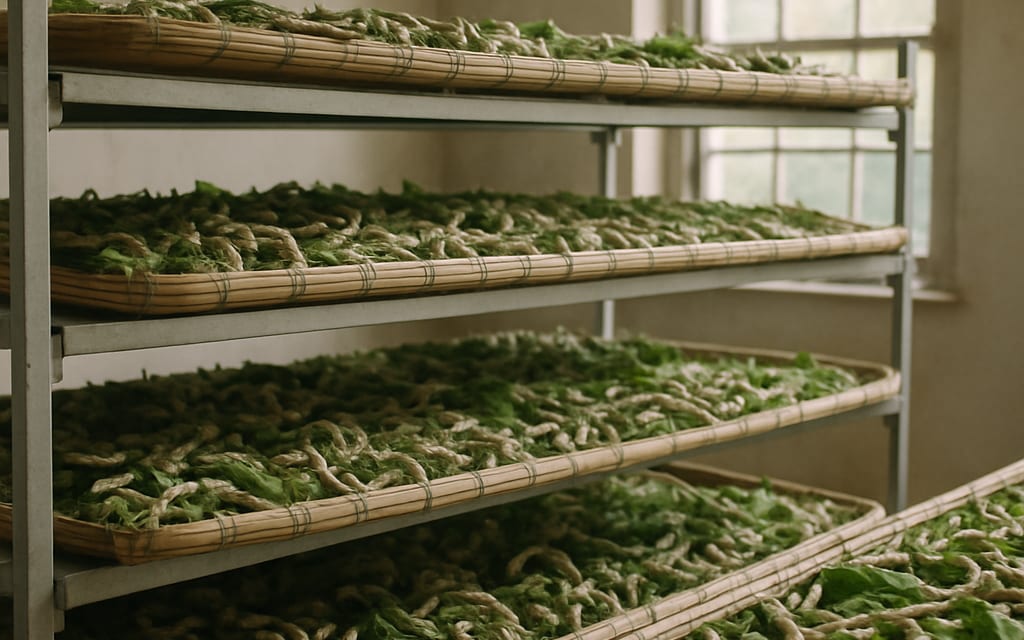
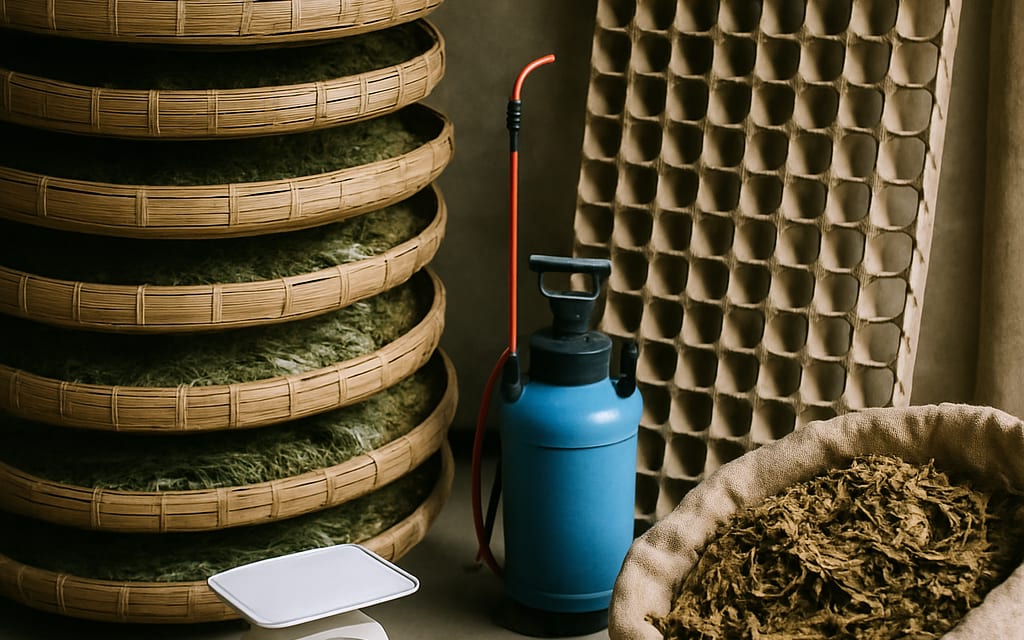
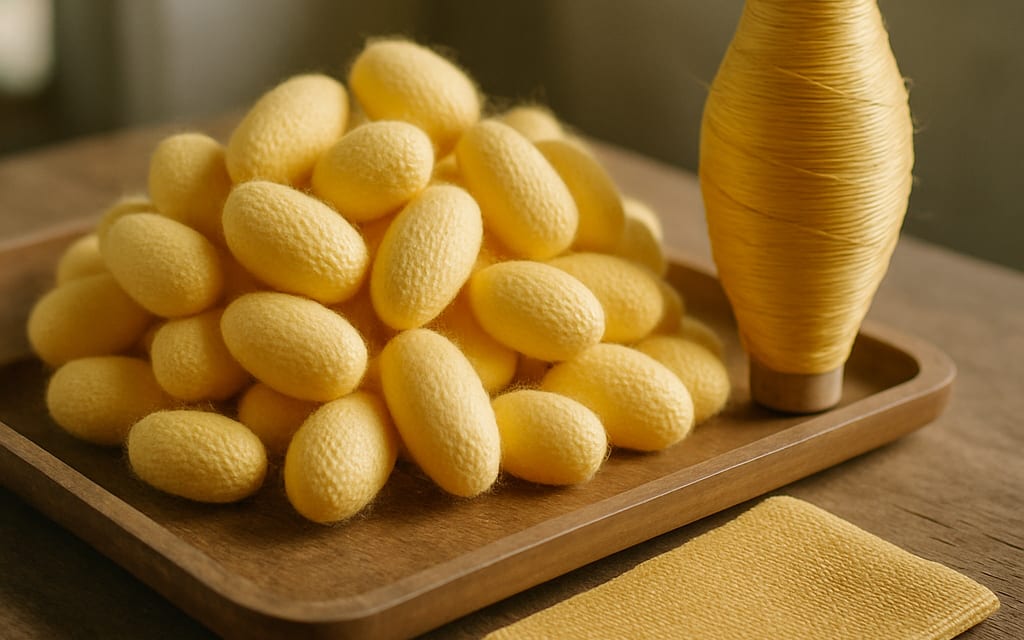
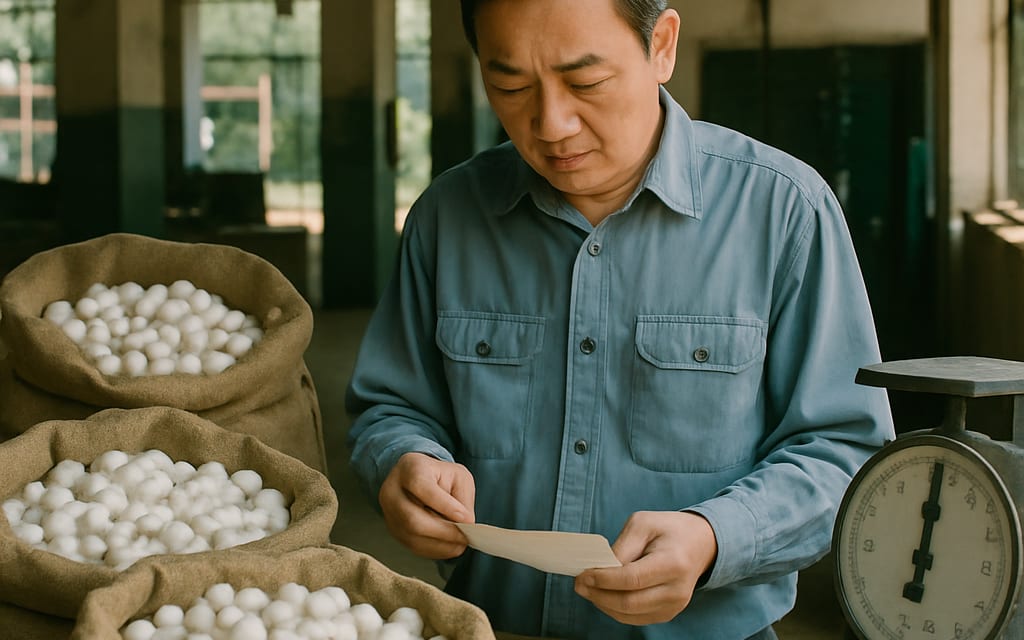
📸Gallery
📋Eligibility — by region
🇮🇳India
- Central Silk Board (CSB) registration mandatory for seed (DFL) supply and cocoon market access. State Sericulture Department licensing (Karnataka, AP, TN, WB).
- Udyam (MSME) registration for subsidy eligibility. FSSAI not applicable (non-food); Silk Mark Organization of India (SMOI) tag optional but commands premium.
- Land 1–3 acres for mulberry plantation + 400–600 sqft rearing house. Bivoltine variety preferred for export-grade quality.
🇺🇸USA
- USDA APHIS Plant Protection & Quarantine permit for mulberry import and Bombyx mori rearing. State Department of Agriculture pollinator/insect rearing notification.
- Small-scale (under 50,000 cocoons/yr) generally exempt from FSMA. Niche craft / heritage textile market.
🇬🇧UK
- DEFRA Plant Health Service for mulberry cultivation; APHA notification for live silkworm rearing.
- OPSS general product safety compliance for any textile/silk product placed on market. Trading Standards for labelling.
🇪🇺EU
- EU Plant Health Regulation 2016/2031 for mulberry; country-specific sericulture association registration (Italy, Greece, Bulgaria).
- Eligibility for CAP Pillar II rural development & LEADER schemes on heritage crops.
🌏Australia / Canada / others
- AU: limited domestic sericulture; CSIRO research permits + state biosecurity notification. CA: minimal — niche specialty under provincial agriculture, no formal scheme.
🏗️Setup requirements (capex breakdown)
Edit any value to match your local prices — totals update live and flow into the calculator below.
| Item | Specification | Cost (₹) |
|---|---|---|
| Mulberry plantation | 1 acre V-1 variety + drip irrigation | |
| Rearing house | 400–600 sqft, brick + asbestos roof | |
| Rearing trays + nets + frames | Bamboo trays, nylon nets, spinning frames (chandrike) | |
| Disinfectants + chowki tools | Vijetha, formaldehyde, heating arrangement | |
| Shed deposit + transport + storage | Cocoon transport crates + leaf chambers | |
| Working capital (1 cycle) | DFLs + labour + utilities | |
| Total capex | ₹5,20,000 | |
| Year | Revenue | Cost | Profit | Cumulative |
|---|
⚠️Risks & mitigation
- Mulberry disease (root rot, leaf spot): Use disease-free V-1/S-36 varieties. Crop rotation + neem-cake soil treatment. Maintain drainage.
- Monsoon-affected silkworm rearing: Humidity above 85% triggers grasserie/flacherie. Install dehumidifier + bed disinfection with Vijetha between moults.
- Low-quality silk price competition (Chinese imports): Target bivoltine grade (4A/3A reelable) for export premium. Get Silk Mark certification.
- Market access: Sell through state cocoon mandi (Ramanagara, Sidlaghatta, Hindupur) for transparent auction; cooperatives offer 10–15% premium for graded lots.
💰Funding & support programs
🇮🇳India
- Silk Samagra (CSB): Integrated scheme covering mulberry plantation, rearing house, equipment — 50–75% subsidy depending on category.
- NABARD ACABC: Agri-clinic agribusiness centre loan up to ₹20L with 36–44% back-end subsidy.
- State sericulture subsidies: Karnataka up to 75%, AP up to 75%, Tamil Nadu 50% on mulberry + rearing house.
- PMEGP: 15–35% margin-money grant. KVIC Khadi Silk schemes for value-added silk units.
🇺🇸USA
- USDA Specialty Crop Block Grant (SCBG): grants for non-commodity speciality crops including mulberry / sericulture pilot.
- USDA Beginning Farmer & Rancher Development Program: grants up to $250k for niche speciality farming.
- SBA Microloan: up to $50k for equipment + working capital.
🇬🇧UK
- Innovate UK Agri-Tech Catalyst: grants for heritage / speciality crop revival including silk.
- DEFRA Farming Investment Fund: up to 40% grant on equipment for diversification.
🇪🇺EU
- CAP Pillar II / LEADER: rural-development grants 40–75% for heritage crops.
- Country silk-revival programs: Italy Filiera della Seta, France Cévennes silk revival, Bulgaria/Greece sericulture co-ops.
🌏Australia / Canada
- AU: AgriFutures Emerging Industries grants for niche fibre crops.
- CA: AgriInnovate Program for novel agricultural enterprises.
📄Generate project report (Word + PDF)
Fill in your details — defaults are pre-populated. Click Print as PDF for a browser-printable PDF or Download Word for an editable .docx file usable in bank loan applications.
❓FAQ
How much land do I need for sericulture?
1 acre of mulberry supports approximately 200–250 DFLs per cycle, yielding 120–150 kg cocoons. Scale linearly — 3 acres comfortably runs 600 DFLs per cycle with 4 cycles/year.
Bivoltine vs Cross-breed (CB) cocoon — which is better?
Bivoltine yields 55–65 kg per 100 DFLs at ₹450–550/kg (export reelable). CB yields 65–75 kg at ₹350–420/kg (domestic). For premium markets and Silk Mark, bivoltine wins on rupee terms per acre.
What's the realistic break-even with Silk Samagra subsidy?
For ~₹5L capex with 50% Silk Samagra + state subsidy, effective investment drops to ₹2.5L. At ~₹25k/month net profit, break-even is 10–12 months. Without subsidy, 18–22 months is typical.
How many cycles per year are realistic?
Tropical south India (Karnataka, AP, TN): 4–6 cycles with bivoltine. North/temperate: 2–3 cycles. Each cycle is 28–32 days from chawki to spinning.
Do I need a separate chawki rearing centre?
Chawki (1st–2nd instar) requires precise temperature/humidity. Buying chawki worms from a registered Chawki Rearing Centre (CRC) saves 12 days and lifts cocoon yield by ~20%. Highly recommended for new entrants.